

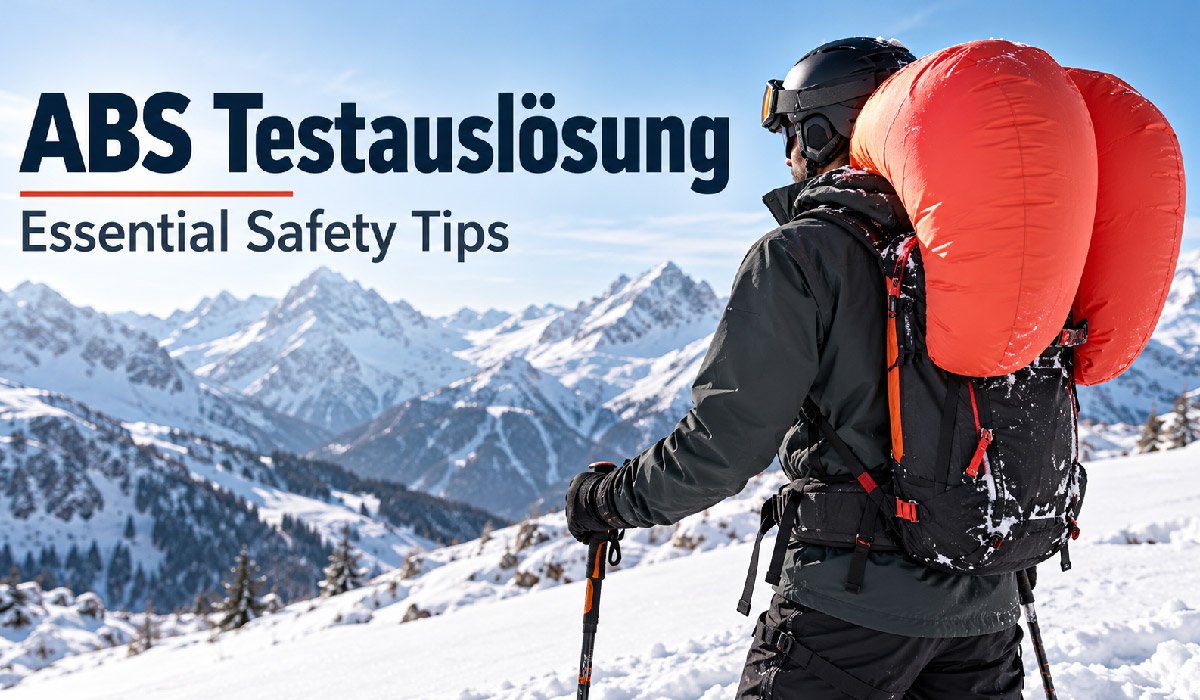
ABS Testauslösung means a controlled test release of an ABS avalanche airbag system. People usually search for this term before winter, before ski touring, or before using an avalanche backpack after long storage.
This test helps the user understand how the release handle works and how the system responds. It can also show if there is an obvious problem before the backpack is needed in real avalanche terrain.
In this article, we explain the meaning of ABS Testauslösung, how the airbag system works, when testing is useful, what to check before and after testing, and why avalanche safety needs more than one device.
What Is ABS Testauslösung?
ABS Testauslösung is a German term. “Testauslösung” means test release, test activation, or test deployment. In this topic, it means testing an ABS avalanche airbag system in a controlled way.
ABS here does not mean the braking system used in cars. It refers to avalanche airbag equipment used by skiers, snowboarders, freeriders, and people who travel in avalanche terrain.
A full ABS Testauslösung may deploy the airbag completely. Some systems may also allow dry trigger practice, where the user practices pulling the handle without full inflation. The exact method depends on the model.
Why Do People Search for ABS Testauslösung?
People search for ABS Testauslösung because they want to understand how to test their avalanche backpack safely. Many users are not sure if they need a cartridge, when to test, or what happens after deployment.
The search is common before the winter season because avalanche equipment may stay unused for many months. Before a first trip, users want to make sure the system is prepared correctly.
Some people also search this term after buying a used or new ABS backpack. They may want to learn the difference between a real deployment test and simple trigger practice.
How an ABS Avalanche Airbag System Works
An ABS avalanche airbag is designed to inflate when the user pulls the release handle. The system increases the user’s volume in moving avalanche snow, which may help the person stay closer to the surface.
A typical system can include a backpack, release handle, cartridge or release unit, inflation parts, airbag chambers, and storage compartments. The exact parts can change between different ABS models and generations.
When the system is armed correctly and the handle is pulled, the inflation process starts. The airbag opens quickly. This is why the system must always be prepared according to the exact manual.
The Safety Purpose of an Avalanche Airbag
The main purpose of an avalanche airbag is to support survival during an avalanche emergency. It is not made to stop an avalanche or protect the user from every injury.
The idea is connected to a simple physical effect. In moving snow, a larger object may have a better chance of staying near the surface than a smaller object. An inflated airbag increases body volume.
However, an avalanche airbag is only emergency equipment. It cannot replace smart route planning, avalanche forecasts, rescue training, a transceiver, a probe, and a shovel.
Why ABS Testauslösung Is Important Before Winter
ABS Testauslösung is important before winter because the backpack may not have been used for a long time. Storage, age, moisture, or damage can affect equipment condition.
A test also helps the user practice the release movement. In an avalanche, there may be only a short moment to reach the handle and pull it correctly.
Testing early is better than testing on the first trip day. If there is a problem, the owner still has time to arrange service, refill or exchange the cartridge, or check the correct parts.
Full ABS Testauslösung Explained
A full ABS Testauslösung means the airbag is actually deployed. The user prepares the system with the correct filled cartridge or approved release unit and pulls the handle as instructed.
This test checks more than hand movement. It allows the user to see whether the airbag opens, whether inflation appears normal, and whether the release process works as expected.
After a full test, the backpack is not automatically ready for another trip. The cartridge or release unit may need refill, exchange, or replacement, and the airbag must be packed correctly again.
Dry Trigger Practice Explained
Dry trigger practice means practicing the release action without a full airbag deployment. Some ABS systems allow this type of practice, but not every system works the same way.
This practice can help the user learn where the handle sits and how much movement is needed. It is useful when wearing gloves, winter clothing, and the backpack in a real position.
Dry practice has limits. It does not test the full cartridge, inflation path, airbag fabric, or airbag chambers. Users should only do it if their exact ABS model allows it.
Full Test vs Dry Trigger Practice
A full test and dry trigger practice are not the same. A full test deploys the airbag and gives a better idea of how the complete system works during activation.
Dry trigger practice is mainly for learning the handle position and pulling movement. It may be easier to repeat, but it does not confirm full airbag inflation.
Both can be useful, but they have different purposes. A full test is stronger for system checking, while dry practice is stronger for repeated user training. The manual should decide what is allowed.
When Should You Perform an ABS Testauslösung?
The best time for ABS Testauslösung is before the winter season starts. This gives the user enough time to handle problems before entering avalanche terrain.
Testing can also be useful after buying a new backpack, changing to another ABS system, adjusting the pack setup, or returning after a long break from touring.
A real avalanche deployment needs special attention. If the backpack was used in an avalanche or damaged in a hard fall, the user should follow inspection and service instructions before trusting it again.
What to Check Before ABS Testauslösung
Before testing, first identify the exact ABS backpack and airbag system. The correct manual matters because older and newer systems may have different steps.
Check the backpack fabric, airbag compartment, straps, waist belt, buckles, release handle, and leg loop if the model uses one. Look for cuts, loose parts, heavy wear, or unusual damage.
Also check the cartridge or release unit. It must be the correct type for the system. Do not use another brand or model only because it looks similar.
How to Perform ABS Testauslösung Safely
ABS Testauslösung should be done in a controlled place with enough open space. The airbag needs room to open freely without hitting walls, furniture, sharp objects, or people.
Wear the backpack like you would during a winter trip. Adjust the shoulder straps and waist belt properly. If your model requires a leg loop, secure it correctly.
Prepare the system only as the manual explains. When everything is ready, pull the release handle firmly as instructed. If the system behaves strangely, stop and check the issue before use.
What to Check After Airbag Deployment
After a full deployment, look carefully at the inflated airbag. It should open properly and should not show clear damage, tearing, strange shape, or unusual air loss.
Check visible seams, fabric, connections, and the airbag compartment. A test is useful only if the result is taken seriously, so do not ignore anything that looks wrong.
If the airbag does not fully deploy or loses air too quickly, do not repack it and use it normally. Follow the manual or contact an approved service provider.
Cartridge Replacement, Refill, and Exchange
A full ABS Testauslösung uses the gas or release supply needed for deployment. After the test, the system must be prepared again before it can be trusted.
Depending on the model, the cartridge or release unit may need to be refilled, exchanged, or replaced. The correct process depends on the exact ABS system.
Never place an empty cartridge with ready equipment. This can create a dangerous mistake before a trip. Use only cartridges or parts approved for that specific system.
How to Deflate and Repack the Airbag
After a full test, the airbag must be deflated properly. The correct method should come from the product manual, not from guessing or copying another model.
If the airbag is wet, let it dry as required before packing it away. Moisture can affect storage and may damage parts over time.
Repacking is very important. The airbag should be folded and placed exactly as the manufacturer explains. Poor packing may stop the airbag from opening correctly during the next deployment.
Problems That Can Happen During Testing
One problem is that the airbag may not deploy after pulling the handle. This can happen because of cartridge, release, setup, or system problems.
Another problem is partial deployment. If the airbag opens only partly, loses air quickly, or one chamber does not work as expected, the test should not be treated as successful.
The trigger may also feel unusual or show an unexpected status. In all these cases, the safest choice is to stop using the system until the problem is checked properly.
Maintenance, Storage, and Professional Service
ABS Testauslösung is helpful, but it is not the same as complete professional service. A test shows how the system worked at that moment, but it may not reveal every hidden problem.
The backpack should be checked regularly for visible wear, damage, loose parts, or storage issues. Older systems may need special attention because equipment can change with age.
Store the backpack in a dry and safe place. Keep it away from strong heat, sharp objects, chemicals, and rough pressure. Follow the correct service guidance for your exact model.
ABS Testauslösung and Avalanche Safety
A successful ABS Testauslösung does not make avalanche terrain safe. It only shows that the system worked during that test and that the user practiced the release action.
Avalanche safety starts before the trip. Users should check avalanche forecasts, weather, snow conditions, terrain, slope angle, route choice, and group ability.
An avalanche airbag should be used together with a transceiver, probe, shovel, rescue practice, and proper avalanche education. The best safety decision is still to avoid dangerous slopes when conditions are poor.
Final Thoughts
ABS Testauslösung means testing the release of an ABS avalanche airbag system. It helps users understand their equipment and practice the important movement of pulling the handle.
A full test deploys the airbag and checks more of the system. Dry trigger practice, where allowed, helps with handle familiarity but does not test full inflation.
The most important rule is to follow the manual for the exact ABS model. Test early, use the correct cartridge, inspect the system, repack it properly, and remember that avalanche safety depends on training, planning, and careful decisions.
Frequently Asked Questions
What does ABS Testauslösung mean?
ABS Testauslösung means testing the release of an ABS avalanche airbag system. It is usually done before the winter season to check the system and practice pulling the release handle safely.
Why is ABS Testauslösung important?
ABS Testauslösung is important because it helps users know if the airbag system responds correctly. It also helps them practice the pulling movement before they need it in a real avalanche emergency.
Can I do ABS Testauslösung without a cartridge?
Some ABS systems allow dry trigger practice without a cartridge, but not every model supports this. Always check the manual for your exact ABS backpack before testing without a cartridge.
Do I need to replace the cartridge after a full ABS Testauslösung?
Yes, after a full test deployment, the cartridge or release unit is usually used. It must be refilled, exchanged, or replaced before the backpack is ready for avalanche terrain again.
Does ABS Testauslösung make avalanche travel safe?
No, ABS Testauslösung only checks and practices the airbag release system. Avalanche safety also needs training, weather checks, avalanche forecasts, smart route planning, a transceiver, probe, and shovel.
You may also read: Uncuymaza Explained: Powerful Guide to Its Meaning
