

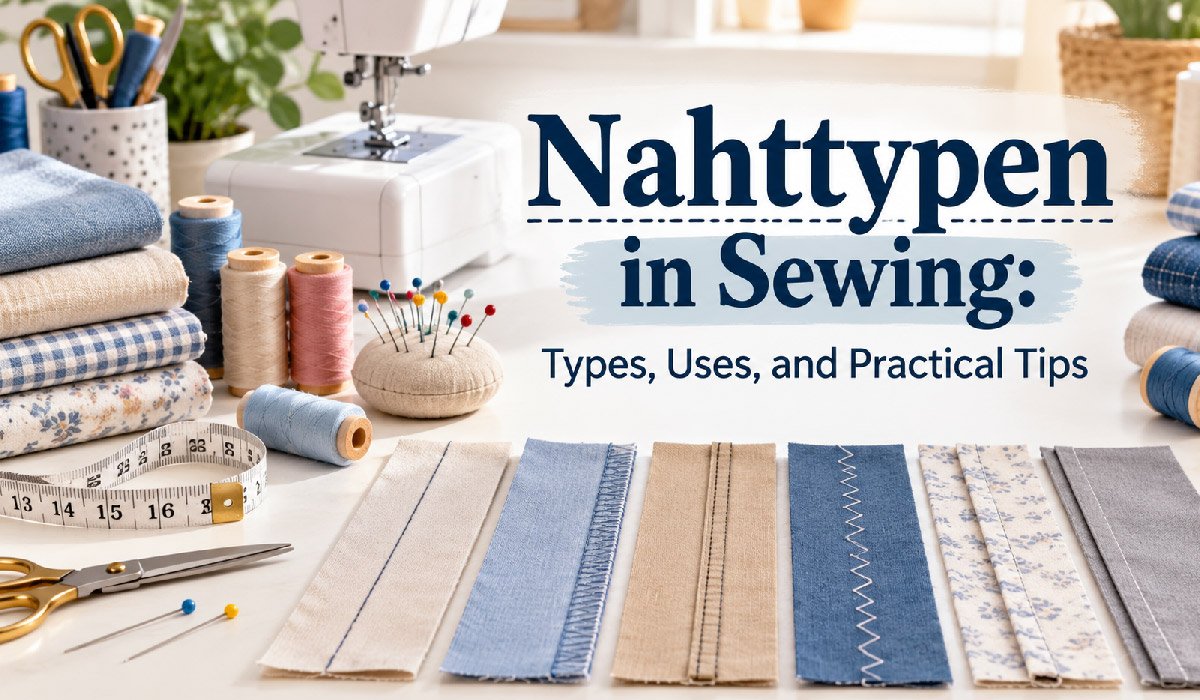
Nahttypen is a German word that means different types of seams or joining methods. It is mostly used in sewing and textile work, but the same word can also appear in welding and medicine.
People search for Nahttypen when they want to understand German sewing terms, fabric seams, weld seams, or suture methods. The meaning depends on the topic around the word.
This article explains Nahttypen in simple English. It covers the main meaning, common seam types, fabric use, welding meaning, medical meaning, and the best way to translate the term correctly.
What Does Nahttypen Mean?
Nahttypen is made from two German words. “Naht” means seam, joining line, weld seam, or suture. “Typen” means types. So, Nahttypen simply means types of seams or types of joins.
In sewing, Nahttypen means the different ways fabric pieces are joined. In welding, it can mean different weld seam types or joint shapes. In medicine, it can mean different suture techniques.
The correct meaning depends on the subject. If the text talks about fabric, thread, and clothing, it means seam types. If it talks about metal or wounds, the meaning changes.
Why Nahttypen Are Important
Nahttypen are important because every material needs the right joining method. A seam is not only used to hold two parts together. It also affects strength, comfort, shape, and durability.
In sewing, the wrong seam can cause fraying, broken stitches, or bulky fabric. A seam for jeans is different from a seam for silk, sportswear, or curtains.
In welding and medicine, the right joining method is also important. A weak weld can reduce safety, while a poor suture choice can affect wound healing. This is why context matters.
Nahttypen in Sewing and Textile Work
In sewing, Nahttypen means seam types. A seam joins two or more fabric pieces with thread. It helps form clothing, bags, curtains, bedding, upholstery, and many other textile products.
Different fabrics need different seams. Cotton, denim, silk, chiffon, jersey, and leather do not behave the same way. Some fabrics stretch, some fray, and some become bulky.
A good seam choice makes the finished item stronger and cleaner. It also helps the fabric sit better. For beginners, learning seam types is one of the most useful sewing basics.
Common Nahttypen in Sewing
A plain seam is one of the most common Nahttypen. It joins two fabric pieces with a simple stitching line. It is easy to sew and works well for many beginner projects.
A French seam hides raw fabric edges inside the seam. It is useful for light and delicate fabrics. A flat-felled seam is stronger and is often used in jeans and workwear.
Other common seams include overlock seams, flatlock seams, bound seams, piped seams, and lapped seams. Each one has a different purpose, depending on fabric, comfort, strength, and appearance.
Nahttypen Comparison Table
A simple comparison of Nahttypen helps readers understand which seam works best in each situation. Plain seams are easy and useful for normal woven fabrics like cotton and linen.
French seams are better for light fabrics because they hide raw edges neatly. Flat-felled seams are better for strong clothing because they give support and a clean finish.
Overlock seams are useful for fast edge finishing. Flatlock seams are better for sportswear because they reduce bulk. Bound and piped seams are often used when appearance is important.
How to Choose the Right Nahttypen for Fabric
The right Nahttypen depends first on the fabric. Light fabrics usually need soft and clean seams. Heavy fabrics need stronger seams. Stretch fabrics need seams that can move.
For delicate fabric, a French seam is often a good choice because it hides raw edges. For denim, a flat-felled seam is useful because it gives strength.
For knit and stretch fabrics, zigzag, overlock, or flatlock seams may work better. Before sewing the final piece, it is smart to test the seam on scrap fabric first.
Seam Strength, Stretch, Comfort, and Appearance
Seam strength matters when the item will face pulling or regular use. Jeans, bags, trousers, uniforms, and workwear usually need strong seams that can handle pressure.
Stretch matters in T-shirts, leggings, underwear, and sportswear. If the seam cannot stretch with the fabric, the stitches may break during movement or washing.
Comfort and appearance also matter. Thick seams can rub against the skin. Clean seams can make the inside of clothing look better. A good seam balances all these needs.
Common Seam Problems and How to Fix Them
One common seam problem is puckering. This happens when fabric wrinkles along the stitching line. It may be caused by wrong tension, wrong needle size, or poor stitch length.
Fraying is another common issue. Some fabrics lose threads at the raw edge. Overlocking, zigzag stitching, binding, or French seams can help control this problem.
Broken stitches happen often on stretch fabric. A normal straight stitch may not move enough. Using a stretch stitch, zigzag stitch, overlock seam, or flatlock seam can help.
German Nahttypen Terms in English
German sewing guides may use terms that are not easy for English readers. Steppnaht usually means plain seam or straight seam. Französische Naht means French seam.
Kappnaht means flat-felled seam. Overlocknaht means overlock seam or serged seam. Zickzacknaht means zigzag seam or zigzag stitch, depending on the use.
Eingefasste Naht means bound seam. Paspelnaht means piped seam. Blindsaum means blind hem. These translations are useful, but the full sewing instruction should always be checked.
Nahttypen in Welding
In welding, Nahttypen can mean weld seam types, weld forms, or joint types. Welding joins metal parts by using heat, pressure, filler material, or a welding process.
German welding terms may include I-Naht, V-Naht, Y-Naht, Kehlnaht, and Überlappnaht. A Kehlnaht is commonly understood as a fillet weld.
The exact English meaning depends on the drawing, metal thickness, joint shape, and welding standard. This is why welding terms should not be translated without technical context.
Nahttypen in Medicine
In medicine, Nahttypen usually means suture types or suture techniques. Sutures are used to close wounds, cuts, or surgical openings so tissue can heal properly.
An Einzelknopfnaht usually means an interrupted suture. A Fortlaufende Naht means a continuous suture. A Matratzennaht means a mattress suture technique.
An Intrakutannaht can mean an intradermal or subcuticular suture. These medical meanings are different from sewing, but the basic idea is still joining two sides together.
How to Translate Nahttypen Correctly
The best way to translate Nahttypen is to look at the topic first. A direct dictionary meaning may not be enough because the word is used in different fields.
If the text talks about fabric, garments, thread, denim, overlock, or sewing machines, the best translation is usually seam types or types of seams.
If the text talks about metal, plates, grooves, or welding symbols, use weld types or joint types. If it talks about wounds, skin, or surgery, use suture types.
Beginner Tips for Understanding Nahttypen
Beginners should start with simple seam types before learning complex ones. A plain seam is usually the best first seam because it is easy and useful.
After that, French seams and flat-felled seams are good to practice. French seams help with light fabrics, while flat-felled seams help with stronger garments.
Always match the seam to the fabric. Use the right needle, thread, stitch length, and tension. Pressing seams while sewing also helps the finished item look cleaner.
Conclusion
Nahttypen means different types of seams or joining methods. In sewing, it explains how fabric pieces are joined and finished. Each seam has its own purpose.
Plain seams are simple, French seams are clean, flat-felled seams are strong, and overlock seams help control fraying. Flatlock seams are useful for stretch and comfort.
The word can also appear in welding and medicine. The correct meaning depends on context. Understanding Nahttypen helps readers choose the right term, method, and seam for each situation.
Frequently Asked Questions
What does Nahttypen mean in English?
Nahttypen means “seam types” or “types of seams” in English. In sewing, it describes different ways to join fabric pieces. The meaning can also change in welding or medicine, depending on the topic.
What are the most common Nahttypen in sewing?
The most common Nahttypen in sewing include plain seam, French seam, flat-felled seam, overlock seam, flatlock seam, bound seam, and piped seam. Each seam type is used for a different fabric, purpose, or finish.
Which Nahttyp is best for beginners?
A plain seam is usually the best Nahttyp for beginners. It is simple, easy to sew, and works well with many basic woven fabrics. Beginners can learn French seams and flat-felled seams after practicing plain seams.
Which Nahttypen are best for stretch fabric?
Stretch fabric usually needs seams that can move with the material. Zigzag seams, stretch stitches, overlock seams, and flatlock seams are useful choices. These seam types help reduce broken stitches when the fabric stretches.
Why is context important when translating Nahttypen?
Context is important because Nahttypen does not always mean sewing seams. In welding, it can mean weld seam types. In medicine, it can mean suture techniques. The surrounding words show the correct English meaning.
You may also read: Yenkly Com Review: Important Facts You Should Know
