

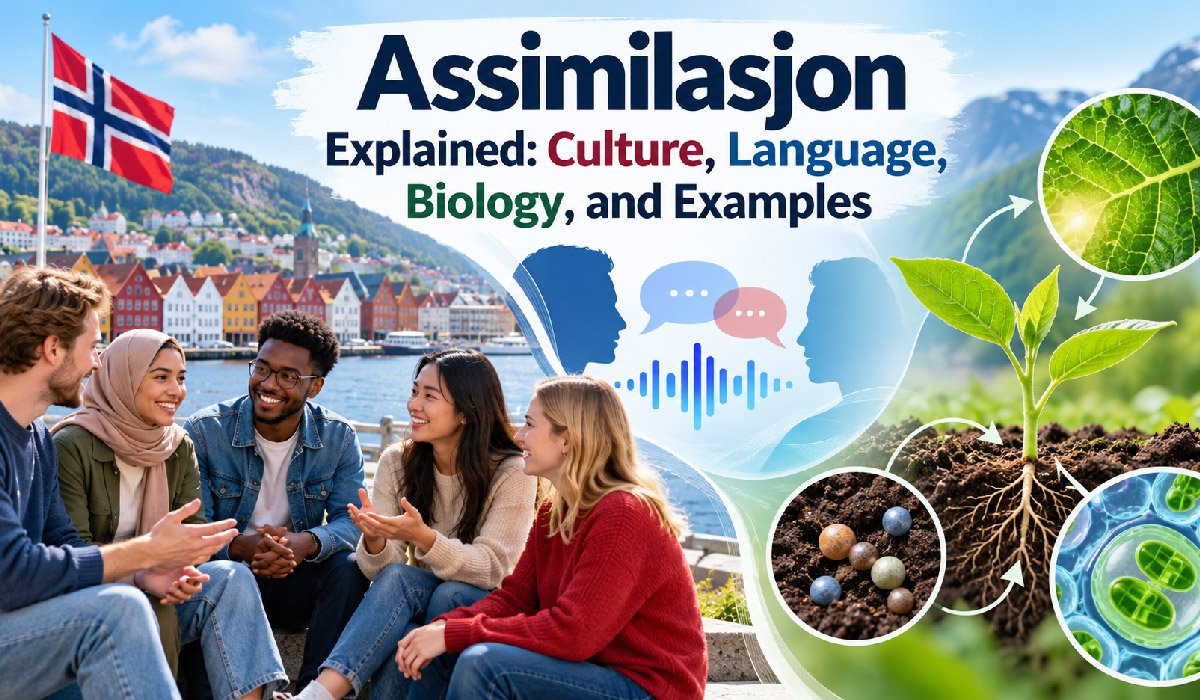
Assimilasjon is a Norwegian word that means assimilation in English. It describes a process where a person, group, sound, or living organism becomes more similar to something else or becomes part of a larger system.
This word is mostly used in culture and society, especially when people talk about immigration, identity, language, and minority communities. It can also appear in school subjects like linguistics and biology.
In this article, we will explain assimilasjon in simple words. We will cover its types, examples, benefits, risks, history, language effects, and modern meaning in a clear and easy way.
What Is Assimilasjon?
Assimilasjon means a process of becoming similar, joining, or being included into something else. The meaning depends on the subject where the word is used.
In society, assimilasjon usually means that people or groups adopt the language, habits, values, or lifestyle of a larger culture. This may happen slowly through school, work, friendships, and daily life.
In linguistics, assimilasjon means one sound becomes more like another nearby sound. In biology, it means nutrients or substances are absorbed and used by living organisms. So, the same word has different meanings in different fields.
Assimilasjon Meaning in Simple Words
In simple words, assimilasjon means becoming more like another group, system, or pattern. For example, when a person moves to Norway and learns Norwegian language and customs, this can be called cultural assimilasjon.
It does not always mean the person loses their original culture. Many people learn a new culture while still keeping their family language, religion, food, and traditions at home.
Assimilasjon can be small or large. A person may change only some habits, or a whole community may change across many generations. The most important point is whether this change happens by choice or pressure.
Why Do People Search for Assimilasjon?
People search for assimilasjon because the word is connected with many important topics. It is used in discussions about immigration, culture, identity, minority rights, education, language loss, and social change.
Students may also search this term for school assignments. It can appear in sociology, Norwegian history, linguistics, biology, and social studies because it has more than one academic meaning.
Many readers want a simple explanation because the term can feel confusing. They may want to know whether assimilasjon is positive, negative, voluntary, forced, or different from integration. A clear guide helps them understand the full idea.
Different Types of Assimilasjon
There are three common types of assimilasjon. The first is cultural assimilasjon, which happens when people adopt parts of another culture, such as language, clothing, food habits, social values, or public behavior.
The second is linguistic assimilasjon. This happens in speech when one sound becomes more similar to another sound near it. It is a normal part of pronunciation in many languages.
The third is biological assimilasjon. This means living organisms take in and use nutrients or substances. Plants, humans, animals, and microorganisms all use assimilation in different biological processes.
Assimilasjon in Society and Culture
In society and culture, assimilasjon means that a person or group becomes more similar to the larger or dominant culture around them. This often happens when people move to a new country.
Cultural assimilasjon may include learning the national language, following local customs, changing communication style, joining local schools, and adapting to public life. These changes can happen naturally over time.
However, cultural assimilasjon is not always complete. A person may speak Norwegian at work and still speak another language at home. Many people live with more than one cultural identity.
How Cultural Assimilasjon Happens
Cultural assimilasjon usually happens through regular contact with society. School is one strong factor because children learn the main language, social rules, and local values from teachers and classmates.
Work also plays an important role. Adults may adopt new communication habits, professional behavior, and social expectations because they interact with colleagues and customers every day.
Friendships, neighborhoods, media, marriage, and public services can also influence assimilation. Over time, people may become more comfortable with the wider culture while still keeping parts of their original background.
Voluntary Assimilasjon
Voluntary assimilasjon happens when people choose to adopt parts of another culture because it helps them in daily life. This choice may bring comfort, confidence, and better social connection.
For example, an immigrant may learn Norwegian to study, work, talk with neighbors, and understand public services. This is a practical choice, not necessarily a rejection of their own culture.
Voluntary assimilation can be useful when it respects personal identity. A person can join society, learn new habits, and still protect their family traditions, religion, language, and cultural memories.
Forced Assimilasjon
Forced assimilasjon happens when people are pressured to give up their language, religion, culture, clothing, customs, or identity. This pressure may come from governments, schools, institutions, or dominant social groups.
Unlike voluntary assimilation, forced assimilation removes choice. It can make minority communities feel that their culture is unwanted, inferior, or unsafe to continue.
The effects can be serious. Forced assimilasjon may cause language loss, shame, identity confusion, family separation, trauma, and distrust of authorities. This is why modern societies often discuss cultural rights and minority protection.
Assimilasjon and the Sámi People in Norway
Assimilasjon is very important in Norwegian history because of the Sámi people. For many years, Norwegian authorities followed policies often called Norwegianization.
These policies encouraged or pressured Sámi and Kven communities to use Norwegian language and adopt Norwegian culture. Schools were a major part of this process, especially for children.
Many Sámi families experienced language decline because speaking Norwegian became necessary for education, work, and public life. Today, this history is discussed with more attention to language rights, cultural protection, and respect for Indigenous identity.
Assimilasjon vs Integration
Assimilasjon and integration are related, but they are not the same. Assimilasjon means a person or group becomes more similar to the majority culture over time.
Integration means people participate in society while still keeping important parts of their original culture. A person can work, study, vote, and join public life without losing heritage.
This difference is important. Assimilation focuses more on becoming similar, while integration focuses more on equal participation. Many modern societies prefer integration because it supports both social unity and cultural identity.
Benefits of Voluntary Cultural Assimilasjon
Voluntary cultural assimilasjon can have many practical benefits. Learning the main language can make education, work, healthcare, government services, and everyday communication much easier.
It can also help people build stronger social networks. When people understand local customs and communication styles, they may feel more confident in schools, offices, and public places.
Assimilation by choice can also open new opportunities. People may gain better access to jobs, friendships, and civic life while still keeping their original family culture and personal identity.
Problems and Risks of Assimilasjon
Assimilasjon can also create problems, especially when people feel pressure to hide or abandon their original culture. This may create emotional stress and identity confusion.
Language loss is one major risk. When children stop learning a heritage language, family stories, traditional knowledge, cultural expressions, and connections with older generations may become weaker.
Some people may also feel caught between two worlds. They may not feel fully accepted by the majority culture, but they may also feel distant from their original community. This can affect belonging and confidence.
Assimilasjon and Identity Across Generations
Assimilasjon often changes across generations. First-generation immigrants usually keep strong connections to their original language, food, religion, and traditions because they grew up with them.
Their children may grow up between two cultures. They may speak the majority language at school and use a family language at home. This can create a bicultural identity.
Later generations may know less about the original language, but they may still feel proud of their heritage. Assimilation does not always remove identity. Sometimes it creates mixed, flexible, and layered identities.
Language Loss and Cultural Preservation
Language is one of the most affected parts of assimilasjon. When a dominant language becomes necessary for school, work, and public life, minority languages may be used less often.
Over time, parents may stop teaching the old language to children because they think the dominant language will give them better opportunities. This can quickly reduce fluent speakers.
Cultural preservation helps protect language and identity. Communities may use language classes, bilingual schools, books, songs, media, family teaching, and cultural events to keep their language alive for future generations.
Assimilasjon in Linguistics
In linguistics, assimilasjon has a different meaning from cultural assimilation. It describes a sound change where one speech sound becomes more like another nearby sound.
This usually happens because it makes speaking easier and faster. People often do this naturally without noticing it, especially in quick everyday conversation.
For example, a sound may change because of the sound before or after it. Linguistic assimilation is not about culture or identity. It is mainly about pronunciation and how spoken language works.
Types of Linguistic Assimilasjon
There are several types of linguistic assimilasjon. Regressive assimilation happens when a later sound affects an earlier sound. Progressive assimilation happens when an earlier sound affects a later sound.
Nasal assimilation is also common. A nasal sound may change depending on the consonant that follows it, making the word easier to pronounce smoothly.
Voicing assimilation can also happen when a sound becomes voiced or voiceless near another sound. These changes are normal in many languages and are not considered speaking mistakes.
Assimilasjon in Biology
In biology, assimilasjon means the process where living organisms take in and use substances needed for life. It is connected with nutrition, growth, repair, and energy.
For humans and animals, food is digested into smaller parts. After absorption, the body uses these nutrients to build tissues, produce energy, and support normal body functions.
This is different from digestion alone. Digestion breaks food down, absorption moves nutrients into the body, and assimilation means the body actually uses those nutrients.
Assimilasjon in Plants, Humans, and Animals
Plants use assimilation in important ways. Carbon assimilation happens when plants take carbon dioxide from the air and use photosynthesis to make useful organic compounds.
Plants also use nitrogen assimilation. They absorb nitrogen from the soil and turn it into compounds needed for proteins, growth, and healthy plant development.
Humans and animals also depend on assimilation. Amino acids help build proteins, glucose provides energy, and fats support cell structure and energy storage. Without assimilation, nutrients would not fully support life.
Assimilasjon in the Modern World
Assimilasjon is still important today because migration, education, global business, travel, and digital communication bring different cultures together more often than before.
Modern societies often ask how people can join public life without losing their language, religion, traditions, or family identity. This is why integration is now discussed more positively than forced assimilation.
Today, many countries encourage people to learn the national language while also respecting minority cultures. The modern goal is often equal participation, cultural choice, and social connection.
Social Media and Digital Assimilasjon
Social media has made cultural assimilation faster and more global. Platforms like TikTok, YouTube, Instagram, and other apps spread slang, fashion, music, humor, and lifestyle trends quickly.
Young people may adopt international trends while still following local customs at home. This creates a mix of global and local culture in daily life.
Digital assimilasjon is often more flexible than older forms. People do not always replace one culture with another. Instead, they combine different influences and create new hybrid identities.
Final Thoughts
Assimilasjon is a broad word with different meanings in society, linguistics, and biology. In all uses, it carries the idea of becoming similar, joining, adapting, or being incorporated.
In culture, assimilasjon can happen by choice or by pressure. Voluntary assimilation may help people join society, but forced assimilation can damage language, identity, and community trust.
The best way to understand assimilasjon is by looking at context. In society, it is about people and culture. In linguistics, it is about sound. In biology, it is about using nutrients and substances.
(FAQs)
What does assimilasjon mean?
Assimilasjon means assimilation. It describes a process where a person, group, sound, or living organism becomes more similar to something else or becomes part of a larger system.
What is assimilasjon in culture?
In culture, assimilasjon means people adopt the language, habits, values, or lifestyle of a larger society. This often happens when people move to a new country or live among another culture.
Is assimilasjon the same as integration?
No, assimilasjon and integration are different. Assimilasjon means becoming more like the majority culture. Integration means joining society while still keeping important parts of your own culture and identity.
What is forced assimilasjon?
Forced assimilasjon happens when people are pressured to give up their language, religion, customs, or identity. It can harm communities because it may cause language loss, cultural loss, and identity problems.
What does assimilasjon mean in linguistics and biology?
In linguistics, assimilasjon means one sound becomes more like a nearby sound. In biology, it means living organisms take in and use nutrients or substances for growth, energy, and repair.
You may also read: Metronidasool Guide: Powerful Uses, Dose, and Safety Tips
