

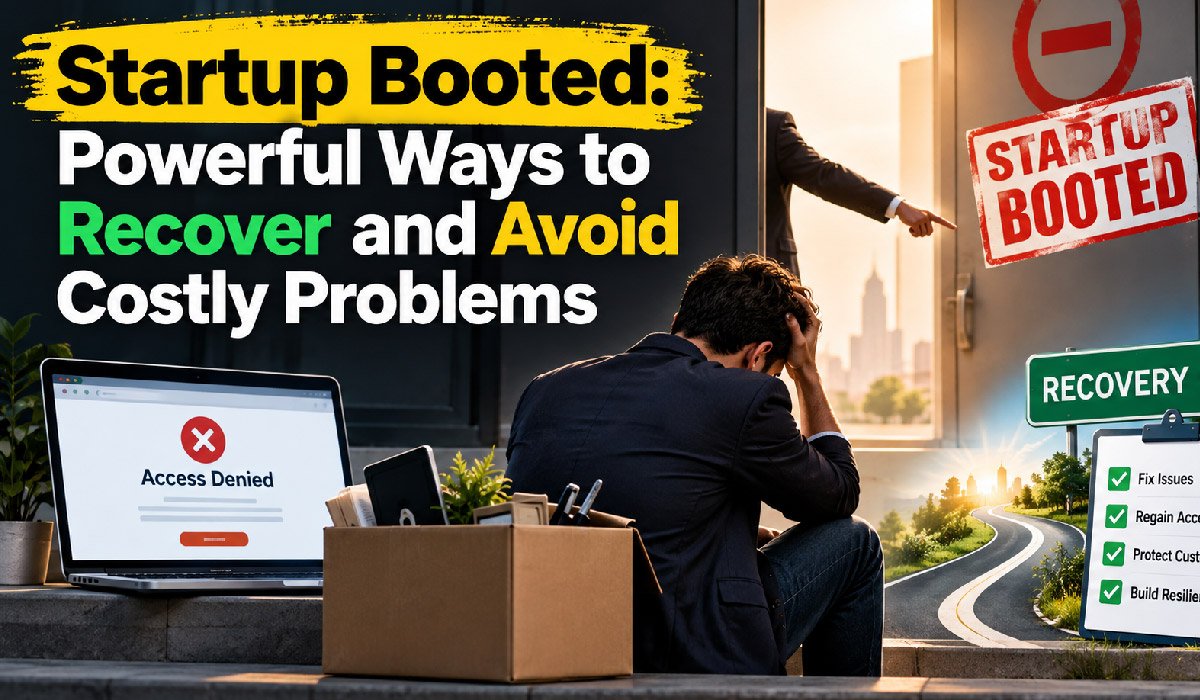
A startup can depend on many outside systems to operate successfully. These may include accelerators, online marketplaces, payment services, investors, business partners, and technology platforms. When access to an important system is suddenly removed, the company may face serious operational problems. This situation is sometimes described using the phrase startup booted.
Being booted does not always mean that a startup has failed. Removal can happen because of policy violations, unpaid fees, contractual disagreements, compliance concerns, performance issues, or changes made by the organization providing access. The actual impact depends on how important that relationship is to the company.
Understanding the situation early can help founders respond more effectively. This guide explains what startup booted means, common reasons it happens, warning signs, possible consequences, recovery options, customer protection, and practical ways businesses can reduce similar risks in the future.
What Does Startup Booted Mean?
The phrase startup booted can describe a startup that has been removed, suspended, excluded, or forced to leave a platform, program, partnership, marketplace, or other business environment. The word “booted” is informal, so its exact meaning depends heavily on the situation in which it is being used.
For example, a startup could be removed from an accelerator after failing to meet participation requirements. An online business could lose access to a marketplace because of policy concerns. Another company might lose an important partnership because the parties disagree about payments, performance, ownership, or contractual responsibilities.
For founders, the important issue is not simply whether the startup was “booted.” They need to identify exactly what happened, who made the decision, what reason was provided, and what agreement or policy applies. These facts determine whether access can potentially be restored and what the company should do next.
Different Types of Startup Booted Situations
A startup booted situation can happen in several business environments, and each type creates different risks. A company could lose membership in an accelerator or incubator, access to an online marketplace, permission to use a software platform, or an important relationship with a commercial partner.
Technology businesses can be particularly dependent on outside services. Payment processors, app stores, cloud providers, advertising networks, e-commerce marketplaces, and software services may become essential parts of daily operations. Losing one of these relationships can interrupt payments, distribution, customer acquisition, or access to important tools.
Other situations may involve investors, professional networks, commercial properties, suppliers, or regulated markets. Because these situations are different, founders should avoid treating every removal in the same way. Understanding which relationship has ended and what business functions depend on it is the first step toward choosing an appropriate response.
Why Do Startups Get Booted?
There is no single reason why a startup may lose access to a program, platform, or partnership. One common cause is failure to follow agreed rules. Platforms and business programs usually have terms that companies must follow, including payment, conduct, security, performance, and reporting requirements.
Contract problems can also cause removal. A startup may miss payments, fail to complete agreed milestones, provide inaccurate information, or disagree with another party about responsibilities. Intellectual property concerns, customer complaints, security incidents, and suspected misuse of a service can also trigger restrictions or reviews.
Sometimes the problem is not entirely caused by the startup. Platforms can change their policies, accelerators can change their selection requirements, and partners can change their business strategies. Founders therefore need to examine the official explanation and relevant documents before reaching conclusions about why the removal happened.
Startup Booted From an Accelerator or Incubator
Startup accelerators and incubators often provide mentorship, networking opportunities, workspace, training, investor introductions, and sometimes funding. In return, participating companies may be required to attend meetings, report progress, reach agreed milestones, follow program rules, or meet other conditions described in their agreements.
If a startup is removed from such a program, founders should review the original documents carefully. Important details may include termination conditions, funding arrangements, equity terms, confidentiality requirements, intellectual property provisions, notice procedures, and any process available for questioning or appealing the decision.
Removal can create challenges, but it does not automatically end the startup itself. The company may still own its product, maintain customer relationships, generate revenue, and seek support elsewhere, depending on its agreements. Founders should determine exactly what benefits or rights have been lost before deciding how significantly the removal affects future operations.
Startup Booted From a Platform or Marketplace
Online platforms and marketplaces can give startups quick access to large numbers of customers. A young company may use an app store to distribute software, a marketplace to sell products, an advertising platform to attract buyers, or a payment service to collect customer payments.
This convenience can also create dependency. If the startup’s account is suspended or removed, sales and customer access may be affected immediately. The company could experience interrupted payments, lower visibility, customer confusion, additional support requests, or difficulty delivering services that depend on the external platform.
Founders should therefore understand the rules of every important platform they use. They should also maintain company-controlled assets wherever possible, including their domain, website, customer communication channels, business records, and lawful backups. Building alternative distribution and payment channels can reduce the damage caused when one external platform becomes unavailable.
Startup Booted From a Partnership or Investor Relationship
Business partnerships can provide money, technology, distribution, expertise, or market access. However, relationships can become difficult when parties disagree about strategy, spending, performance, ownership, reporting, management decisions, or responsibilities. A serious disagreement may eventually result in termination of a partnership or other contractual rights.
Investor situations require especially careful interpretation. An investor disagreeing with a founder does not automatically mean the investor can simply remove the startup. Actual rights depend on investment agreements, shareholder documents, governance arrangements, company law, and any other contracts governing the relationship.
When a dispute occurs, founders should preserve relevant records and review the documents before making major decisions or public statements. Professional legal advice may be necessary when ownership, governance, significant money, or contractual rights are involved. A fact-based response can prevent an already difficult disagreement from creating additional business problems.
Legal, Financial, and Compliance Reasons
Some startup booted situations are connected to legal, financial, or compliance concerns. Depending on the company’s activities and location, relevant requirements can involve privacy, data security, consumer protection, advertising, employment, taxation, financial services, intellectual property, licensing, or industry-specific regulations.
Financial problems can create similar disruption. A startup may lose a supplier, software service, office, or commercial relationship after repeatedly missing payments. Even a business generating significant revenue can face cash problems when expenses are high, customers pay slowly, debt increases, or working capital is poorly managed.
Founders should therefore monitor both compliance responsibilities and financial health. Contracts, invoices, licenses, tax documents, security procedures, privacy practices, and other important records should remain organized. When a serious legal or regulatory question appears, qualified professional guidance can help the company understand the specific obligation and appropriate response.
Warning Signs a Startup May Get Booted
Startup removal can sometimes appear sudden, but warning signs may develop before the final decision. Formal warnings are among the clearest signals. A platform or partner might send notices about unpaid balances, policy violations, missing information, customer complaints, unusual activity, or requirements that have not been completed.
Other signs can be less obvious. A startup might receive repeated requests for documents, experience temporary account restrictions, encounter delayed contract renewals, or notice that an important partner has become less responsive. Missed milestones and unresolved payment disputes can also indicate growing problems within a relationship.
Founders should investigate these signals instead of assuming they will disappear. Early action may provide more options for correcting mistakes or explaining misunderstandings. Keeping communication records is also useful because it creates a timeline showing what happened, what information was requested, and how the startup responded before any final action occurred.
What Happens After a Startup Is Booted?
The impact of being booted depends largely on how dependent the startup was on the lost relationship. If a marketplace generates most of the company’s sales, removal could cause an immediate revenue decline. Losing a payment provider could prevent customers from completing purchases or renewing subscriptions.
The effects can spread beyond revenue. Customers may become confused about existing orders, employees may worry about the company’s future, and support teams may receive more questions. Marketing costs can increase if the business must quickly replace a major acquisition channel. Access to data or operational tools may also become an issue.
Founders should identify the most urgent business functions first. Customer safety, existing commitments, payments, data, communication, and essential operations usually require early attention. Understanding the direct and indirect consequences allows the company to allocate limited resources toward the problems that could cause the greatest damage.
What Should Founders Do After Being Booted?
The first response should focus on facts and documentation. Founders should preserve the original suspension, removal, or termination notice and read it carefully. They need to identify the stated reason, effective date, affected services, available response procedure, and any deadline for submitting information or an appeal.
The next step is reviewing relevant agreements and policies. These documents may explain termination rights, notice requirements, outstanding payments, dispute procedures, data access, confidentiality duties, and other continuing obligations. Important company-controlled assets and records should also remain securely accessible and properly backed up.
After understanding the situation, founders can contact the relevant organization through its official process. Communication should be clear and supported by evidence rather than assumptions. At the same time, the company should prepare alternatives in case access is not restored. This reduces the risk of spending valuable time waiting for an uncertain decision.
How to Recover, Appeal, and Protect Customers
Recovery usually begins by determining whether an official review or appeal process exists. Some platforms allow suspended businesses to provide documents, correct violations, verify information, or challenge decisions. Accelerators, partners, and other organizations may have different procedures established by contracts or internal policies.
Even when an appeal is available, founders should not assume restoration is guaranteed. They should provide accurate information, meet deadlines, address the stated problem, and maintain records of communications. If the issue involves significant contractual or legal questions, professional advice may be appropriate before submitting a formal response.
Customers also need attention during the disruption. Businesses should clearly explain any confirmed effects on orders, subscriptions, refunds, service access, or support. Updates should focus on information customers actually need rather than unverified details about the dispute. Clear communication can protect trust while the startup works toward restoration or an alternative solution.
How to Prevent Startup Booted Problems and Build Resilience
Prevention begins with understanding the relationships a startup depends on. Founders should know the important rules, payment requirements, contracts, renewal dates, and compliance obligations connected with major platforms and partners. Responsibilities should be assigned clearly so critical notices and deadlines are not overlooked.
Diversification provides another layer of protection. Depending entirely on one marketplace, payment processor, supplier, advertising channel, or major customer creates concentration risk. Where practical, businesses can develop alternative channels and maintain direct customer relationships through assets they control, such as their website and communication systems.
Operational resilience also requires reliable records, secure backups, sensible financial reserves, documented processes, and regular risk reviews. These measures cannot prevent every suspension or dispute, but they can reduce the damage. The goal is to ensure that losing one external relationship does not automatically prevent the entire company from operating.
Startup Booted vs Bootstrapped Startup
The phrases startup booted and bootstrapped startup can sound similar, but they should not automatically be treated as the same concept. In the context discussed here, startup booted refers to a company being removed, suspended, excluded, or losing access to an important business environment.
A bootstrapped startup has a different meaning. Bootstrapping generally describes building a company primarily with founders’ own resources and revenue generated by the business rather than relying heavily on outside investment. A bootstrapped company may deliberately control spending and grow gradually as revenue increases.
The distinction matters because people searching these terms may have different questions. Someone researching a bootstrapped startup may want information about funding and sustainable growth, while someone searching for a startup that was “booted” may be interested in removal, suspension, or disruption. Context is therefore essential when interpreting the phrase.
Final Thoughts
A startup booted from an accelerator, platform, marketplace, partnership, or another important ecosystem can experience significant disruption. However, removal from one environment does not automatically mean that the underlying business has failed. The real effect depends on what was lost and how dependent the company was on that relationship.
Founders should respond by establishing the facts, preserving records, reviewing relevant agreements, protecting business-controlled assets, and understanding available recovery procedures. Customers should receive clear information when their orders, subscriptions, payments, data, or access to services may be affected.
The broader lesson is the importance of business resilience. Startups can reduce risk by maintaining financial discipline, understanding contracts, following applicable requirements, protecting data, and avoiding unnecessary dependence on a single outside organization. Strong foundations make it easier to respond when an important business relationship unexpectedly changes.
(FAQs)
What does Startup Booted mean?
Startup Booted usually describes a startup that has been removed, suspended, or excluded from a platform, accelerator, marketplace, partnership, or another business environment.
Why can a startup get booted from a platform?
A startup may lose access because of policy violations, missed payments, security concerns, compliance problems, customer complaints, contract issues, or changes in platform requirements.
Can a Startup Booted situation be fixed?
Sometimes. The startup may be able to appeal the decision, correct the problem, provide requested documents, or negotiate with the organization. Available options depend on the relevant rules and agreements.
What should founders do after their startup gets booted?
Founders should identify the exact reason, save important notices, review contracts and policies, protect business data, communicate with affected customers, and prepare alternative operating channels.
How can founders prevent Startup Booted problems?
Founders can reduce risk by following platform rules, monitoring contracts, maintaining financial and compliance records, keeping secure backups, and avoiding excessive dependence on one platform or business partner.
You may also read: HRMS Globex: Powerful Guide to Login, Payroll & HR Tools
