

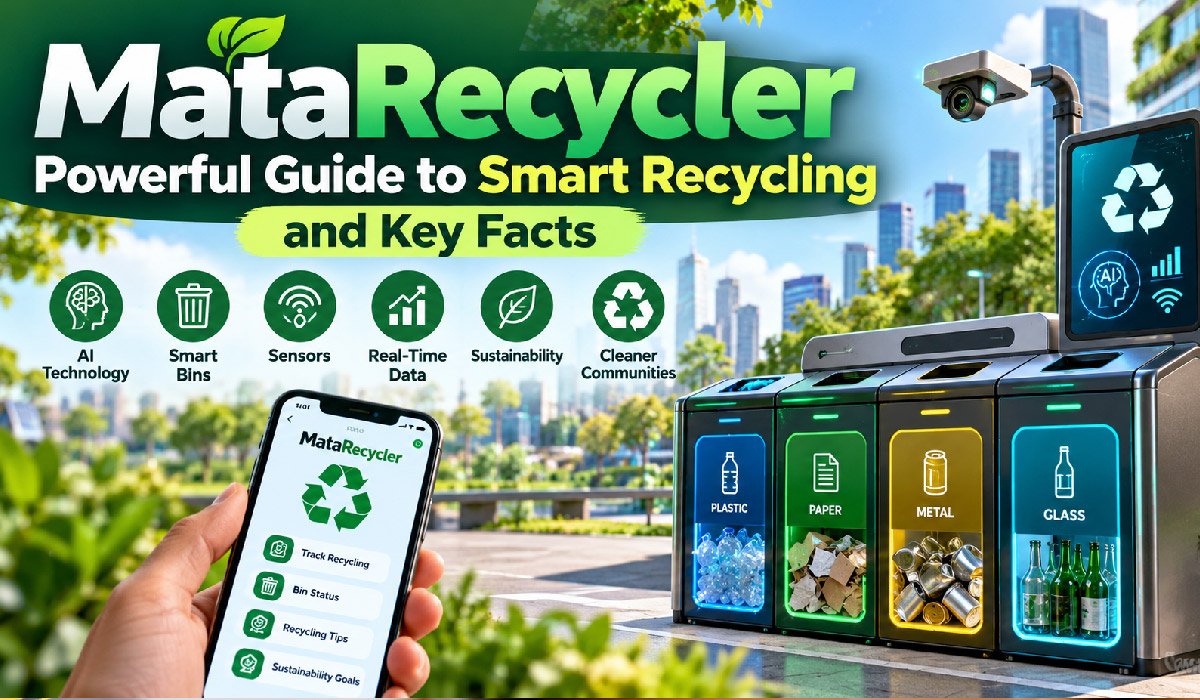
MataRecycler is a name connected with recycling, waste management, reuse, and environmental sustainability. Interest in the term has grown because different websites describe it in different ways. Some present MataRecycler as an online platform that shares recycling information, while others describe it as an advanced technology system designed to make waste sorting smarter and more efficient.
The technology-focused descriptions connect MataRecycler with artificial intelligence, smart bins, cameras, sensors, Internet of Things technology, and cloud-based data. According to these reports, these tools could identify different waste materials, monitor recycling bins, and provide useful information about waste collection. However, not all of these features have been confirmed through clear primary documentation.
This difference is important when trying to understand MataRecycler. The available information supports its connection with recycling and sustainability, but many advanced product claims remain unclear. This guide examines its background, reported technology, possible features, users, benefits, limitations, pricing, ownership, and the important difference between confirmed information and claims made by third-party sources.
What Is MataRecycler?
MataRecycler is best understood as an online name associated with recycling, waste management, reuse, and sustainable practices. Its website focuses on making environmental information easier for readers to understand. Topics connected with the platform include recycling methods, responsible waste disposal, waste reduction, resource reuse, and environmentally responsible everyday choices.
Some online sources give MataRecycler a much broader definition. They describe it as an intelligent waste-management system that may use artificial intelligence and automated technology to recognize different materials. These descriptions suggest that cameras, sensors, software, and connected recycling bins could work together to improve how waste is identified, separated, monitored, and collected.
However, there is not enough primary technical evidence to assume that every reported feature belongs to a confirmed commercial MataRecycler product. No clearly documented product catalogue or standard hardware specification has been established in the supplied information. Therefore, readers should distinguish MataRecycler’s documented environmental content from the more advanced technology claims appearing on third-party websites.
MataRecycler Background and Online History
Public information about the early history of MataRecycler is limited. One of the clearest details available is the creation of the MataRecycler.com domain on November 2, 2025. This date provides a useful starting point for understanding its online presence, although a domain registration date does not necessarily reveal when the underlying idea or project was originally developed.
The website presents MataRecycler as a resource connected with creating a cleaner future through recycling, better waste management, reuse, and sustainable choices. It refers to a team behind the platform, but the supplied information does not identify individual team members. There is also no clearly documented founder, CEO, company headquarters, or detailed organizational history.
This limited background information makes careful wording necessary. The existence of a website does not by itself prove that MataRecycler operates as a registered technology company or manufactures physical recycling equipment. Until more company documentation becomes available, it is more accurate to describe MataRecycler as an online recycling and sustainability platform associated with additional smart-recycling claims.
What Does MataRecycler Offer?
The clearest offering connected with MataRecycler is environmental and recycling information. The platform discusses ways people can manage waste more responsibly and understand the importance of recycling. It also covers broader sustainability ideas, including reducing unnecessary waste, reusing useful products, making responsible consumption choices, and keeping materials in use instead of quickly throwing them away.
This approach is important because recycling is only one part of responsible waste management. Before an item reaches a recycling bin, it may sometimes be repaired, donated, reused, or given another purpose. Reducing unnecessary consumption can also prevent waste from being created. These practices support the wider sustainability and resource-management ideas associated with MataRecycler.
Third-party websites describe additional services involving smart recycling technology, automated sorting, monitoring, and analytics. However, these should be separated from the clearly visible informational role of the platform. The supplied evidence does not confirm that MataRecycler operates recycling plants, provides household waste collection, manufactures commercial smart bins, or currently sells a complete AI-powered recycling system.
How Does MataRecycler Work?
The confirmed informational side of MataRecycler works mainly by helping readers understand recycling, waste management, and sustainable practices. Its content can provide individuals, businesses, and communities with information about reducing waste and using resources more responsibly. This educational role does not require the platform to operate physical recycling machines or collection facilities.
The reported smart-recycling version works differently. According to third-party descriptions, an item could first enter a smart bin or sorting system where cameras and sensors examine it. Software could analyze characteristics such as shape, size, appearance, or material properties. An AI model could then compare this information with learned patterns to determine the likely waste category.
After identification, an automated system could direct the material toward an appropriate recycling stream. Connected sensors might also measure waste volume and bin capacity. This information could be sent to a central dashboard for monitoring and collection planning. This process reflects how MataRecycler is described by outside sources, but a standard official MataRecycler technical workflow has not been publicly confirmed.
AI, Smart Bins, Sensors, and Technology Behind MataRecycler
Artificial intelligence is one of the technologies most frequently associated with MataRecycler in third-party descriptions. AI-based recognition could analyze waste and classify an object as plastic, paper, glass, metal, or another material. Computer vision could support this process by using camera images to examine visible characteristics and compare them with information learned from previous examples.
Sensors and Internet of Things technology could add another layer of information. A smart recycling bin could use sensors to measure its fill level and report when collection is needed. Connected devices could send this information to a central system, allowing waste-management teams to monitor multiple recycling points without manually checking every container.
Cloud-based dashboards and data analytics are also mentioned in descriptions of MataRecycler. These tools could show recycling patterns, waste volumes, collection needs, and operational information. Such technologies already have practical applications in modern waste management. However, their general existence does not prove that every technology has been developed, deployed, or commercially released under the MataRecycler name.
What Materials Can MataRecycler Identify and Sort?
Descriptions of MataRecycler commonly mention several everyday recyclable materials. Plastic is one of the most frequently discussed categories, while some sources also refer to paper, cardboard, glass, aluminium, steel, and other metals. Correctly identifying these materials is important because different recycling streams often require different handling and processing methods.
Some descriptions go further and mention electronic waste, organic waste, and composite materials. These categories can be more complicated. Electronic products contain different components, while composite packaging may combine paper, plastic, foil, coatings, and adhesives. An item that looks recyclable may therefore require a very different process from a simple glass bottle or aluminium container.
There is currently no clearly confirmed official MataRecycler compatibility list showing every material the system can identify or process. This distinction matters because identifying an object is not the same as recycling it. Even if technology recognizes a material correctly, whether that material can actually be recycled depends on local facilities, contamination levels, equipment, and local recycling rules.
Main Features of MataRecycler
The main confirmed feature of MataRecycler is access to information about recycling and sustainable waste practices. The platform’s wider purpose includes helping people understand waste reduction, responsible disposal, reuse, and environmental awareness. This educational approach can be useful for readers who want straightforward information about making better decisions before materials become waste.
Third-party descriptions associate MataRecycler with a much larger collection of technical features. These reportedly include AI material recognition, computer vision, automated waste classification, smart-bin monitoring, fill-level sensors, contamination detection, IoT connectivity, cloud-based dashboards, waste analytics, automated alerts, and collection planning. A mobile recycling assistant is also mentioned by some sources.
These features could form a useful connected waste-management system if they are available as described. However, no single official specification has been established that confirms all these capabilities within one MataRecycler product. Readers should therefore avoid treating lists of reported features as a technical specification sheet until stronger product documentation, demonstrations, or verified deployments become available.
Who Can Use MataRecycler?
Based on the platform’s environmental focus, MataRecycler information can be relevant to individuals, businesses, and communities. Individuals can learn about separating recyclable materials, reducing household waste, reusing products, and making more responsible consumption choices. Communities can also use recycling education to improve awareness and encourage better waste-management habits among residents.
If the reported smart technology exists as described, businesses and educational organizations could also have potential uses for it. Offices, retailers, schools, universities, and manufacturing facilities generate different types and quantities of waste. Better sorting information and waste data could help these organizations understand where waste is generated and where recycling practices may need improvement.
Municipalities and local waste teams are another potential user group mentioned in technology-focused descriptions. Smart-bin data could theoretically help cities identify full containers and improve collection schedules. However, possible applications should not be confused with confirmed customers. The supplied information does not provide a reliable public list of businesses, schools, cities, or governments currently using a verified MataRecycler system.
Potential Benefits of MataRecycler
One clear benefit of MataRecycler’s informational content is environmental education. Better information can help people understand why reducing, reusing, and correctly recycling materials matters. When users understand which items belong in different waste streams, they may make fewer disposal mistakes and become more aware of how everyday consumption affects waste generation.
The claimed smart-recycling technology could provide additional benefits if its features are eventually verified. AI-assisted identification could potentially reduce sorting errors, while smart sensors could provide more accurate information about bin capacity. Collection teams could then focus on bins that actually require service rather than visiting every location according to the same fixed schedule.
Waste analytics could also help organizations identify long-term patterns and support sustainability planning. Better sorting may increase material recovery, while more efficient collection could reduce unnecessary vehicle journeys. However, these are potential benefits of smart recycling systems generally. They should not be presented as measured MataRecycler achievements unless reliable case studies or independently verified performance data directly support them.
MataRecycler Accuracy and Performance Claims
One of the strongest claims associated with MataRecycler concerns sorting accuracy. Some third-party material suggests that the system may achieve accuracy above 95 percent, while other descriptions of smart recycling technology mention even higher figures. Such numbers can sound impressive, but performance percentages require clear testing methods and reliable evidence before they can be treated as established facts.
Another reported claim suggests that recyclable material collection increased by around 40 percent in a community using MataRecycler. However, the available information does not clearly identify the community, city, independent research organization, or detailed study behind this figure. Without this information, readers cannot properly examine how the result was measured or whether other factors influenced it.
AI recycling technology in general can achieve strong results under suitable conditions, but results from another company or recycling facility cannot automatically prove MataRecycler’s performance. Reliable verification would require named installations, transparent testing procedures, technical reports, or independent studies. Until such evidence is available, specific MataRecycler performance percentages should be presented as reported rather than verified results.
Limitations, Safety, Privacy, and Data Concerns
One major limitation surrounding MataRecycler is the lack of detailed primary information. If the reported system includes smart bins, cameras, sensors, software, and automated sorting equipment, users would need information about installation, maintenance, reliability, certifications, and operating requirements. Connected hardware may also depend on stable electricity, network access, software updates, and regular physical maintenance.
Privacy becomes important when cameras, cloud services, and user-tracking features are involved. Users would reasonably want to know whether cameras record images, whether those images are stored, what personal information is collected, where data is kept, and how long records remain available. Access controls, encryption, account protection, and cybersecurity procedures would also require clear explanations.
The supplied information does not provide enough technical documentation to answer these questions for a confirmed MataRecycler product. This does not prove that appropriate protections are absent. It simply means they cannot currently be verified from the available material. Any organization considering connected recycling technology should examine privacy policies, security standards, certifications, maintenance requirements, and data-handling practices before adoption.
MataRecycler Pricing, Availability, and Ownership
Reliable pricing for MataRecycler is not publicly established in the supplied information. There are no confirmed prices for smart bins, hardware packages, software subscriptions, installation, maintenance, business plans, or municipal deployments. Readers should therefore be cautious when encountering exact prices unless they can trace those figures to reliable first-party product information.
Commercial availability is similarly unclear. There is no confirmed list showing the countries or cities where MataRecycler equipment can be purchased or installed. Information about Android, iOS, web applications, system requirements, APIs, software integrations, and supported third-party platforms also remains limited. These details would normally be important when evaluating a commercial technology product.
Ownership is another area where information is incomplete. A founder, CEO, legal owner, headquarters, company registration, funding history, and employee count have not been clearly established. The domain’s registrar should also not be confused with the platform’s owner. Until reliable corporate information appears, describing MataRecycler as an online platform is more precise than assuming it is an established registered technology company.
Is MataRecycler a Real AI Recycling System or an Information Platform?
This is the central question surrounding MataRecycler because available sources present two noticeably different pictures. Its main online presence supports a description centered on recycling information, sustainability, waste reduction, and environmental awareness. This provides a clear and understandable role for MataRecycler without requiring assumptions about sophisticated physical products.
Other websites describe something much larger: an AI-powered recycling ecosystem involving smart bins, computer vision, sensors, automated sorting, mobile software, cloud dashboards, analytics, and smart-city integrations. These technologies are realistic and already exist elsewhere in the recycling industry. The unanswered question is whether all of them belong to one documented MataRecycler commercial system.
At present, important supporting evidence remains limited. Clearly documented hardware models, detailed technical specifications, verified app listings, named customer installations, independent performance tests, pricing, and company ownership have not been firmly established in the supplied material. Therefore, MataRecycler is best treated as an online recycling platform associated with reported smart-recycling technology rather than presenting every advanced claim as confirmed fact.
Final Thoughts
MataRecycler is connected with an important subject: finding better ways to reduce waste, recover useful materials, and encourage environmentally responsible behavior. Its clearest documented role is as an online platform focused on recycling, waste management, reuse, sustainability, and environmental awareness. These topics can help individuals and organizations better understand responsible resource use.
The more advanced picture of MataRecycler includes artificial intelligence, cameras, sensors, smart bins, IoT connectivity, automated sorting, cloud dashboards, and recycling analytics. These technologies could potentially improve waste identification, contamination control, monitoring, and collection efficiency. However, many of these specific MataRecycler features come from third-party descriptions rather than clearly established primary technical documentation.
For this reason, readers should keep confirmed information separate from reported claims. MataRecycler may become easier to evaluate if detailed product specifications, company information, pricing, verified applications, customer deployments, and independent testing become available. Until then, its recycling and sustainability focus is clear, while claims about a complete commercial AI recycling system require further evidence.
Frequently Asked Questions
What is MataRecycler?
MataRecycler is an online platform associated with recycling, waste management, reuse, and sustainability. Some third-party sources also describe it as an AI-powered smart recycling system, but many of these advanced technology claims are not fully verified.
How does MataRecycler work?
MataRecycler’s confirmed online presence focuses mainly on recycling and sustainability information. Third-party descriptions claim that its smart system may use AI, cameras, sensors, and connected technology to identify waste, monitor bins, and improve recycling operations.
Does MataRecycler use artificial intelligence?
Some online sources describe MataRecycler as using artificial intelligence, computer vision, sensors, and automated waste identification. However, detailed official technical specifications confirming a complete commercial AI-powered MataRecycler system have not been clearly established.
What materials can MataRecycler identify?
Reports connect MataRecycler with materials such as plastic, paper, cardboard, glass, aluminium, steel, electronic waste, and organic waste. However, there is currently no clearly confirmed official compatibility list showing exactly which materials a MataRecycler system can identify or process.
Is MataRecycler a real smart recycling system?
MataRecycler has a clear online connection with recycling and sustainability, but its status as a complete commercial smart recycling system remains unclear. Claims involving smart bins, AI sorting, apps, and advanced analytics need stronger primary evidence before being treated as confirmed features.
You may also read: AelfTech.com Review: Powerful Digital Marketing Services for Business Growth
