

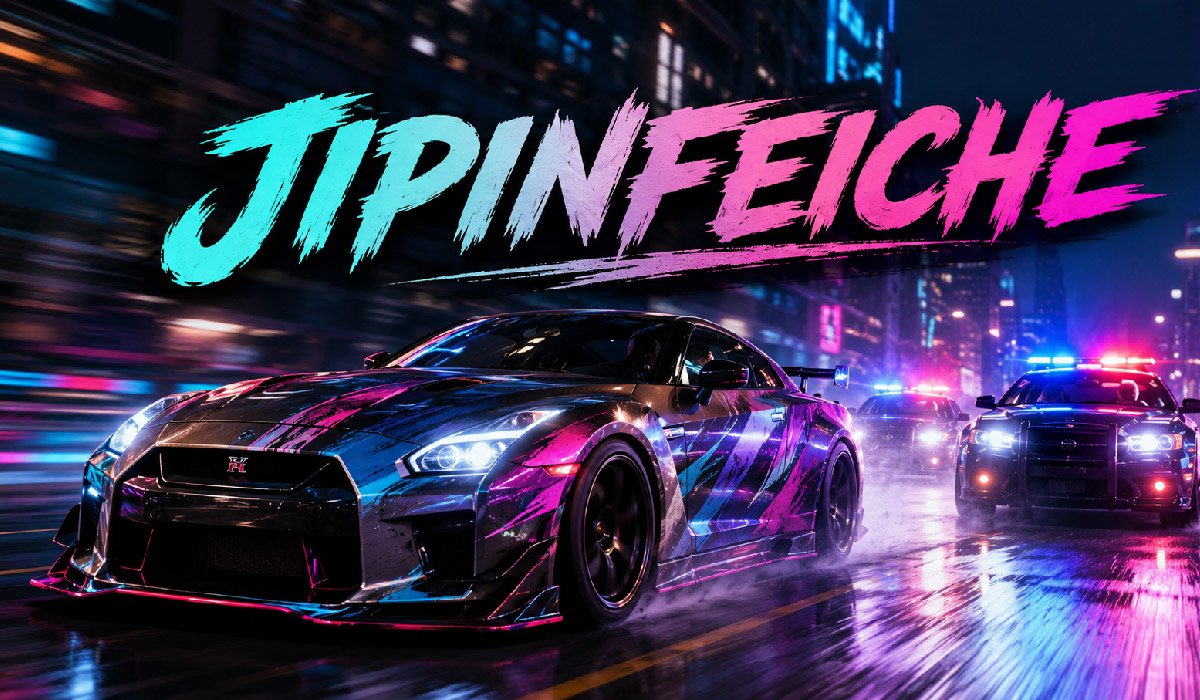
Jipinfeiche is a term closely connected with the famous Need for Speed racing game series. It comes from the Chinese name 极品飞车 and commonly appears in gaming searches, videos, guides, and discussions.
The term is popular because Need for Speed has entertained racing fans for decades. Fast cars, street racing, police pursuits, customization, and exciting environments have made Jipinfeiche recognizable among Chinese-speaking gaming communities.
This guide explains what Jipinfeiche means, its connection with Need for Speed, franchise history, gameplay, cars, customization, racing modes, police pursuits, online play, community interest, and its continuing popularity today.
What Is Jipinfeiche?
Jipinfeiche is the pinyin form of 极品飞车, the Chinese title commonly used for Electronic Arts’ Need for Speed racing game franchise. It is not the name of a completely separate racing series.
The words also reflect the series’ high-speed character. 极品 (jípǐn) can suggest something excellent, premium, or top-class, while 飞车 (fēichē) relates to speeding or fast-moving vehicles.
Therefore, people searching Jipinfeiche are generally looking for Need for Speed games, cars, downloads, gameplay, guides, or related information. The term is especially useful for understanding Chinese-language discussions surrounding the franchise.
Why Is Jipinfeiche Connected to Need for Speed?
Need for Speed is known as 极品飞车 in Chinese-language gaming contexts. When written using pinyin instead of Chinese characters, 极品飞车 becomes Jípǐn Fēichē, commonly typed online without tone marks as Jipinfeiche.
This explains why the keyword can initially look unfamiliar to English-speaking users. It is neither an English abbreviation nor simply a random misspelling of another gaming term.
The connection becomes clearer when the keyword appears beside racing cars, EA games, police chases, vehicle tuning, or gameplay videos. In these situations, Jipinfeiche generally points toward the wider Need for Speed franchise.
How Need for Speed Started
Need for Speed began in 1994, introducing players to high-performance cars and exciting competitive driving. The early games focused heavily on the experience of controlling powerful vehicles at speeds difficult to experience in everyday life.
As the franchise developed, its scope became much broader. New entries introduced different environments, larger car selections, improved graphics, new race formats, police pursuits, and increasingly detailed customization systems.
Different development teams have worked on the franchise during its long history. Despite these changes, speed has remained its central identity, helping Need for Speed become a recognizable racing-game name across generations.
How Street Racing Changed the Series
Street racing became an important part of the franchise’s identity, particularly during the era associated with titles such as Need for Speed: Underground. Racing moved toward urban environments filled with modified cars and nighttime atmosphere.
Customization became much more important during this period. Players were encouraged to build vehicles that looked different instead of simply choosing a car and entering another event.
Music, modified vehicles, city streets, performance upgrades, and visual customization helped create a distinctive culture around these games. This direction strongly influenced how many players remember the Need for Speed franchise today.
The Jipinfeiche Gameplay Experience
Jipinfeiche generally provides an arcade-style driving experience. Instead of requiring players to understand every technical detail of professional motorsport, the games are designed around responsive controls, excitement, speed, and accessible competition.
That does not mean driving skill is unimportant. Players can improve by learning braking points, racing lines, corner exits, acceleration control, overtaking opportunities, and the behavior of individual vehicles.
Different events may also reward different approaches. Aggressive driving can sometimes create opportunities, while smooth and controlled racing may produce better results elsewhere. Learning when to use each approach makes racing more enjoyable.
Cars Are at the Heart of Jipinfeiche
Cars have always been central to Need for Speed. Depending on the particular release, players can experience sports cars, muscle cars, supercars, exotic vehicles, and other recognizable models from major automotive manufacturers.
Different vehicles can provide noticeably different experiences. Some cars may feel responsive through tight corners, while powerful models can perform better on roads where acceleration and high top speeds are important.
Choosing a favorite car is also part of the appeal. Players often become attached to particular models after upgrading, customizing, and using them throughout multiple races, challenges, pursuits, and other events.
Vehicle Customization and Personal Style
Customization is one of Jipinfeiche’s most recognizable features. Many Need for Speed games allow players to transform ordinary-looking vehicles into personalized racing machines through a combination of visual and performance modifications.
Visual options can include paint, wheels, decals, spoilers, body components, and other cosmetic changes. Available features vary between individual games, but personalization has played a major role in numerous franchise entries.
Customization gives players greater ownership over their vehicles. Two people may begin with the same model yet create completely different finished cars based on their tastes, preferred visual themes, and individual racing styles.
Performance Upgrades and Tuning
Visual changes affect how a vehicle looks, while performance upgrades influence how it behaves during racing. Depending on the game, players may be able to improve areas such as engines, tires, brakes, suspension, and handling.
Simply maximizing power is not always the ideal approach. A very powerful vehicle can become difficult to use effectively if its braking, grip, or handling cannot match its increased performance.
Balanced upgrades can therefore be valuable. Players can experiment with different setups, race the vehicle, identify weaknesses, and make further changes until the car becomes better suited to their preferred driving approach.
Police Pursuits and High-Speed Action
Police pursuits are among the most famous elements associated with Need for Speed. Instead of racing only against other drivers, certain games challenge players to escape law-enforcement vehicles during intense high-speed situations.
Pursuits can force drivers to think differently. Players may need to avoid roadblocks, react to approaching police vehicles, use alternative routes, maintain speed, and escape without losing control of their car.
This creates tension that ordinary races cannot always provide. Games such as Need for Speed: Most Wanted helped make police pursuits especially memorable, strengthening their place within the identity of the franchise.
Racing Modes and Challenges
Jipinfeiche is not built around only one type of race. Individual Need for Speed titles offer different combinations of events, helping provide variety as players progress through their chosen game.
Depending on the release, these can include circuit races, sprints, time-based challenges, drift events, pursuits, and other competitive activities. Different events test different aspects of driving ability.
A car that performs extremely well in one event may not necessarily be the ideal choice elsewhere. Understanding the road, event requirements, and vehicle characteristics can therefore become just as useful as having raw speed.
Open-World Driving and Exploration
Several Need for Speed releases use open-world environments, allowing players to drive around larger areas rather than moving directly from one closed racing track to another.
This design gives players additional freedom. They can explore roads, learn shortcuts, travel between activities, discover different areas, test newly customized vehicles, or simply enjoy driving without immediately beginning another competitive event.
Open-world maps can also make races and police pursuits more interesting. Familiarity with streets, turns, intersections, and alternative routes can help players make quicker decisions when driving at high speed.
Stories, Rivals, and Progression
Some Need for Speed games go beyond individual races by adding characters, rivalries, progression systems, and cinematic storytelling. These features give players reasons to continue beyond simply achieving faster race times.
Rivals can create clear goals. Defeating another driver may represent an important stage in the player’s progress, while unlocking new events, vehicles, upgrades, or areas provides a sense of development.
Storytelling varies significantly between individual releases because each game takes a different approach. However, combining narrative elements with racing has helped create several memorable experiences throughout the franchise’s history.
Jipinfeiche and Online Racing
Online features allow the racing experience to continue beyond computer-controlled opponents. Players can compete against other people, compare their skills, use customized cars, and experience less predictable competition.
Human opponents can behave differently from game-controlled racers. Some drive aggressively, others carefully protect their racing line, while experienced competitors may take advantage of very small mistakes.
This variety can make multiplayer racing highly replayable. Players can continue practicing after completing other parts of a game because competing against different people regularly creates fresh situations and challenges.
The Jipinfeiche Gaming Community
Jipinfeiche has a wider community built around Need for Speed. Players discuss favorite games, memorable vehicles, tuning setups, customization ideas, difficult events, racing techniques, and differences between older and newer releases.
Gameplay videos are another important part of this community. Players can watch races, police pursuits, car builds, challenges, tutorials, and other Need for Speed content shared by gaming creators.
Community discussion also helps older games remain visible. Long after their original release periods, fans can continue talking about memorable soundtracks, maps, vehicles, stories, customization systems, and experiences from classic entries.
Why Older Need for Speed Games Remain Popular
New technology does not automatically make older racing games irrelevant. Many longtime players continue returning to classic Need for Speed releases because individual games created distinctive experiences that newer entries do not completely replace.
Nostalgia certainly contributes to this popularity. Players may remember particular cars, songs, characters, maps, or races from when they first experienced the games years earlier.
Gameplay matters as well. Strong racing mechanics, memorable environments, satisfying progression, customization, and exciting police pursuits can remain enjoyable regardless of age. This helps classic entries maintain active fan interest.
Why Jipinfeiche Remains Popular
One major reason for Jipinfeiche’s lasting popularity is accessibility. Players can understand the basic objective quickly: choose a vehicle, race fast, improve performance, defeat opponents, and continue progressing.
The franchise also combines several appealing ideas rather than depending on racing alone. Cars, customization, exploration, competition, police pursuits, progression, music, and visual presentation can work together to create a broader experience.
Most importantly, Need for Speed delivers automotive experiences that are difficult or impossible for most people to safely experience in everyday life. Games provide a fictional environment for enjoying high-performance driving and extreme speed.
Is Jipinfeiche a Separate Racing Game?
Jipinfeiche should not be treated as the title of an unrelated racing franchise. The term comes from the Chinese name 极品飞车 and is commonly associated with the Need for Speed series.
The confusion often happens because people unfamiliar with Chinese pinyin see “Jipinfeiche” written in Latin letters. Without context, it can easily look like an independent game, website, company, or newly invented word.
Understanding the Chinese characters removes much of that confusion. Searches using Jipinfeiche can therefore overlap heavily with searches involving Need for Speed games, racing guides, vehicles, gameplay, and franchise-related content.
Is Jipinfeiche a Philosophy or Lifestyle Concept?
Jipinfeiche sometimes appears online with broader interpretations involving productivity, personal growth, or lifestyle ideas. However, its established gaming use comes from 极品飞车, the Chinese title associated with Need for Speed.
Speed can certainly work as a metaphor for ambition or progress. That does not change the keyword’s direct connection with the racing franchise when discussing its recognized Chinese gaming meaning.
For readers trying to understand what Jipinfeiche actually refers to, Need for Speed provides the clearest context. Cars, racing, customization, and high-speed gameplay are therefore central to understanding the term.
Tips for New Jipinfeiche Players
Beginners should avoid concentrating only on maximum speed. Learning when to brake, how to enter corners smoothly, and when to accelerate again can improve race performance considerably.
Vehicle selection also matters. Test several cars instead of immediately assuming the vehicle with the highest top speed will perform best. Handling characteristics can become especially important on roads containing frequent turns.
Finally, improve the car gradually and practice regularly. Learn familiar routes, reduce unnecessary collisions, experiment with upgrades, and observe where mistakes happen. Better driving technique can often provide greater benefits than raw horsepower alone.
Is Jipinfeiche Worth Playing Today?
Jipinfeiche remains appealing for people who enjoy accessible racing, powerful cars, customization, high-speed action, exploration, and competition. Players can choose between different Need for Speed releases depending on the experience they prefer.
Modern entries offer newer graphics, vehicles, environments, customization systems, and online features. Older releases can provide distinctive gameplay, memorable locations, soundtracks, stories, and racing styles that still attract longtime fans.
This variety is one of the franchise’s strengths. There is no requirement to begin with the oldest release. Players can select an entry that best matches their preferred platform and racing experience.
The Future of Jipinfeiche
Need for Speed has changed repeatedly throughout its history, and future development can continue combining the franchise’s traditional strengths with improvements in modern racing-game technology.
Players increasingly expect detailed environments, strong customization, online competition, smooth performance, impressive graphics, and rewarding progression. At the same time, longtime fans often value memorable cars, street-racing atmosphere, police pursuits, and accessible arcade driving.
Balancing these elements will remain important. Whatever direction future releases take, the basic attraction behind Jipinfeiche is straightforward: exciting cars, competitive racing, personalization, and the thrill of speed.
Final Thoughts
Jipinfeiche is the pinyin form commonly associated with 极品飞车, the Chinese name for the Need for Speed franchise. Understanding this connection explains why the keyword frequently appears alongside racing games, cars, tuning, and gameplay.
Need for Speed has built its identity around fast arcade racing, licensed vehicles, customization, street culture, open environments, competitive events, and memorable police pursuits. Different releases emphasize these features in different ways.
For anyone searching “Jipinfeiche” and wondering what it actually means, the simplest answer is Need for Speed. It represents the Chinese-language identity of one of gaming’s best-known racing franchises.
Frequently Asked Questions
What does Jipinfeiche mean?
Jipinfeiche is the pinyin form of 极品飞车, the Chinese title commonly associated with the Need for Speed video game franchise. The name reflects the series’ focus on fast, high-performance vehicles and racing.
Is Jipinfeiche the same as Need for Speed?
Yes. In the gaming context, Jipinfeiche refers to 极品飞车, the Chinese name used for the Need for Speed franchise rather than a completely separate racing series.
Is Jipinfeiche a separate video game?
No. Jipinfeiche is not an independent racing franchise. People using this keyword are generally referring to Need for Speed games, gameplay, vehicles, customization, guides, or related gaming content.
When did Need for Speed begin?
The Need for Speed franchise began in 1994. It later expanded through numerous releases featuring different combinations of racing, high-performance cars, street culture, customization, police pursuits, and open-world driving.
Why is Jipinfeiche so popular?
Jipinfeiche is popular because Need for Speed combines accessible racing with fast cars, vehicle customization, police pursuits, varied events, exploration, and competition. Its long history has also created a large international fan community.
You may also read: Witelovers: Meaning, Lifestyle, Design Ideas and Complete Guide
